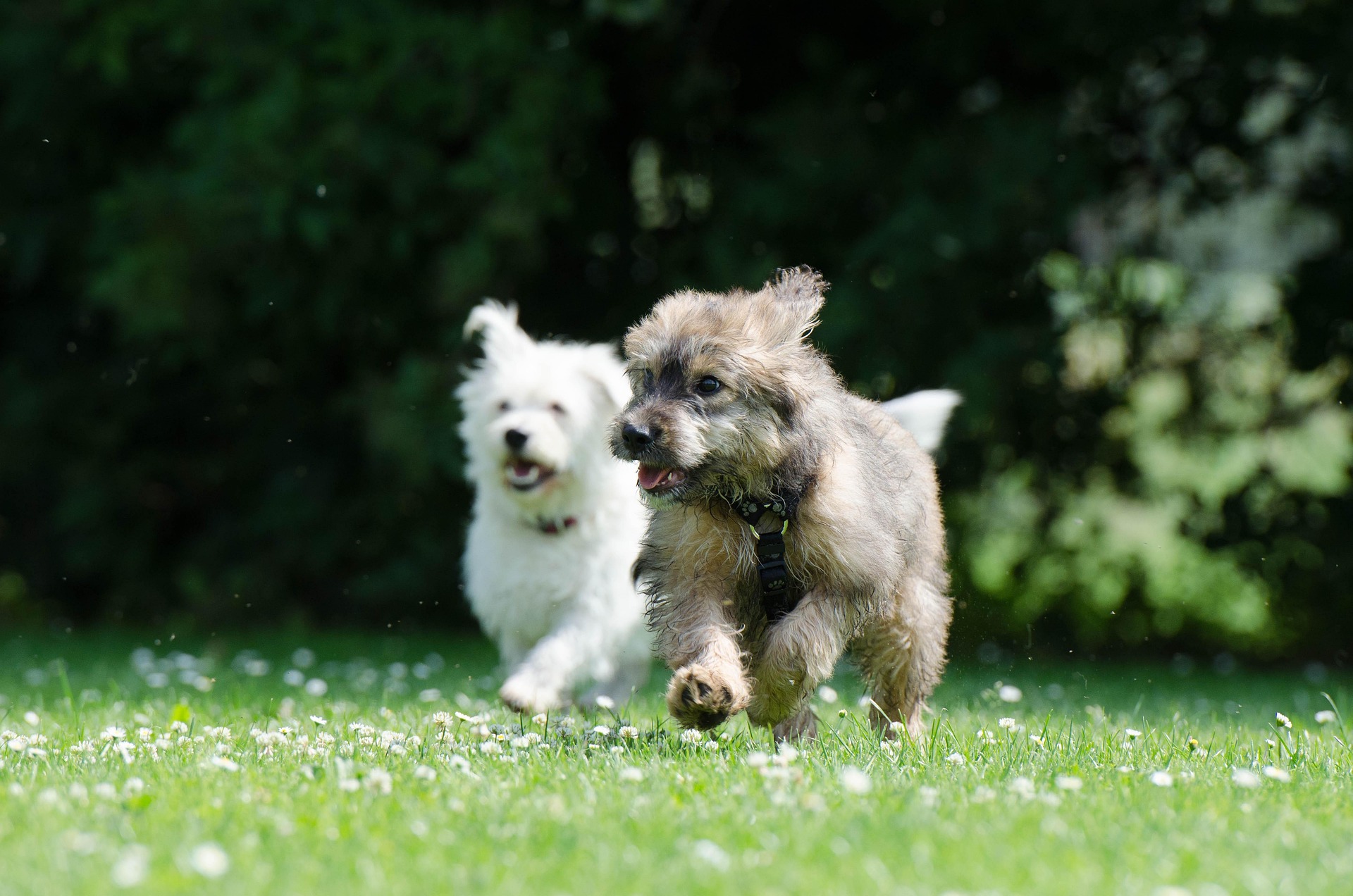
Korean Conversation: Two Friends Talk About Their Dogs at the Park
The same park conversation, written three times. The difficulties are beginner, intermediate, and advanced. You can practice at any level!
While vocabulary lists can be good for knowing more words, they don’t necessarily train you for conversations. What does is directly practicing with conversations themselves. Whether that’s through reading, writing, listening, or speaking. This article helps with the first one. Now, it’s important to find conversations that aren’t so hard that you can’t follow and conversations that aren’t so easy that you learn nothing.
But guess what? All levels have something to learn from the following dialogue. As the same scene is recounted thrice. Two friends run into each other at the park with their dogs. The situation doesn’t change. What changes is how two people would actually talk about it at each stage of learning Korean. Starting with careful, simple sentences and ending with the kind of fast, contracted banmal two close friends actually use.
Pick the level that matches where you are, or read all three back to back and notice exactly what changes between them.
Beginner conversation
At this level, both speakers stick to 요-form, short sentences, and vocabulary you’d meet in your first few months of study. Nobody assumes anything the other person doesn’t already know.
준호: 안녕하세요! 강아지 이름이 뭐예요? Hi! What’s your dog’s name?
다은: 안녕하세요! 얘 이름은 콩이예요. Hi! This is Kongi.
준호: 콩이? 귀여운 이름이네요. 몇 살이에요? Kongi? That’s a cute name. How old is she?
다은: 두 살이에요. 콩이는 사람을 좋아해요. She’s two. Kongi likes people.
준호: 저희 강아지 이름은 두부예요. 두부도 두 살이에요. My dog’s name is Dubu. Dubu is two, too.
다은: 와, 동갑이네요! 두부는 활발해요? Wow, they’re the same age! Is Dubu energetic?
준호: 네, 두부는 정말 활발해요. 매일 공원에 와요. Yes, Dubu is really energetic. We come to the park every day.
다은: 저도 매일 와요. 우리 또 만나요! I come every day too. Let’s meet again!
Intermediate conversation
Same two people, same dogs, but now the conversation has texture: connectors like 근데, retrospective endings like -더라고요, and reactions that build on what the other person just said instead of just answering a question.
준호: 어? 여기서 또 뵙네요. 두부가 콩이 냄새를 계속 맡고 있어요. Oh? We keep running into each other here. Dubu keeps sniffing Kongi.
다은: 콩이가 낯을 좀 가려서 그런지 살짝 긴장한 것 같아요. Kongi’s a little shy around strangers, so she seems a bit nervous.
준호: 그렇구나. 두부는 반대로 아무한테나 잘 다가가서 걱정이에요. I see. Dubu’s the opposite since he approaches everyone, which honestly worries me a bit.
다은: 그래도 성격 좋은 거잖아요. 근데 두부는 원래 이렇게 활발했어요? Still, that’s a good personality to have. By the way, has Dubu always been this energetic?
준호: 어릴 때는 안 그랬는데, 크면서 점점 더 활발해지더라고요. He wasn’t like this as a puppy. He just got more energetic as he grew up, I’ve noticed.
다은: 콩이는 반대로 나이가 들수록 차분해졌어요. 산책도 예전만큼 안 좋아해요. Kongi went the other way. She’s gotten calmer with age. She doesn’t even like walks as much as she used to.
준호: 그래도 공원은 좋아하나 봐요, 벌써 뛰어다니는 거 보니까. She must still like the park, though. Look at her already running around.
다은: 맞아요, 여기만 오면 신나 하더라고요. Right, she gets excited every time we come here specifically.
Nuance: While English makes speakers choose between pronouns, in Korean they’re omitted when the context makes it obvious who’s being talked about. At the end of the dialogue, it could be just Kongi, or both dogs running around together depending on what the speakers are seeing. I translated by “she” because that’s what I meant, but “they” (the two dogs) could be interpreted as being what the sentence is referring to.
Advanced conversation
This is closer to how 준호 and 다은 would actually talk once they’re comfortable with each other: full 반말, contractions, slang, and sentences that trail off because both people already know what’s being said.
준호: 야, 오랜만이다! 두부 산책 나왔어? Hey, long time no see! Out walking Dubu?
다은: 어, 오랜만이야. 콩이도 오랜만에 나왔더니 신났나 봐, 아까부터 계속 뛰어다니네. Yeah, it’s been a while. Kongi hasn’t been out in a bit either, guess she’s excited; she’s been running around since we got here.
준호: 두부는 원래 저러다가 지치면 갑자기 뻗어버려. 아까도 그랬잖아. Dubu does that too, then suddenly just collapses once he’s tired. He did that earlier, remember?
다은: 완전 웃기다. 근데 걔넨 둘이 친한가 봐? 계속 붙어 다니네. That’s hilarious. Anyway, those two seem close, huh? They won’t leave each other alone.
준호: 어, 볼 때마다 저래. 아무래도 둘이 케미가 잘 맞나 봐. Yeah, they’re like that every time. I guess they’ve just got good chemistry.
다은: 콩이가 원래 낯가림 심한 앤데, 두부한테는 안 그러더라고. Kongi’s usually really shy around strangers, but she’s not like that with Dubu, I’ve noticed.
준호: 두부가 워낙 사람이건 개건 다 좋아하는 성격이라 그런가 보다. I guess Dubu’s just the type who likes everyone, people and dogs alike.
다은: 하긴, 그런 애가 있으면 편하긴 하지. 오늘 날씨도 좋은데 좀 더 있다 갈까? Fair, it does make things easier having a dog like that around. The weather’s nice today too. Want to stay a bit longer?
준호: 콜. 어차피 애들도 안 갈 것 같은데 뭐. Deal. Doesn’t look like these two are ready to leave anyway.
Reading all three back to back
The vocabulary barely changes. Some words show up at every level. What actually shifts is how much is left unsaid, how loosely the sentences are built, and how much the speakers lean on shared context instead of spelling everything out. That gap between “grammatically correct” and “how people actually talk” is exactly what scripted textbook dialogue tends to skip over. This article follows the same structure, suitable for all levels, but for a recipe instead of a conversation.
Reading these is a start. Saying them out loud is what actually trains your mouth and ear for the real thing. This is essentially the roleplay method from How to Practice Korean Speaking Alone played out in full: pick a role, a goal, and talk it through both sides, no partner required.
If you want a new scene like this one every day, with the same kind of level-appropriate build, 30 Days of Korean Speaking is built around exactly that.
30 Days of Korean Speaking
A new scenario every day, with a role, a goal, useful expressions, and a challenge that gets harder as you go.
Explore the Challenge →